
Introduction: Starting Strong in Digital Marketing
Starting out in digital marketing can feel overwhelming. There are countless platforms, strategies, and metrics to track—SEO, social media, email marketing, analytics, and more. The good news? You don’t have to figure it all out manually.
With the right tools, even beginners can streamline workflows, automate repetitive tasks, and compete with more experienced marketers. But here’s the catch: with so many tools out there, which ones should you actually use?
In this article, I’ll share the top tools every beginner digital marketer should use, based on personal experience, industry best practices, and proven results.
Why Tools Matter in Digital Marketing
Before diving into the list, let’s quickly understand why tools are so crucial:
-
Save Time: Automate posting, reporting, and data gathering.
-
Improve Accuracy: Eliminate guesswork with reliable analytics.
-
Boost Productivity: Focus on strategy instead of manual tasks.
-
Level the Playing Field: Compete with larger brands using affordable software.
When I started digital marketing, I wasted hours doing things manually—scheduling posts, analyzing traffic, sending newsletters. Once I discovered the right tools, everything became faster, smoother, and more effective.
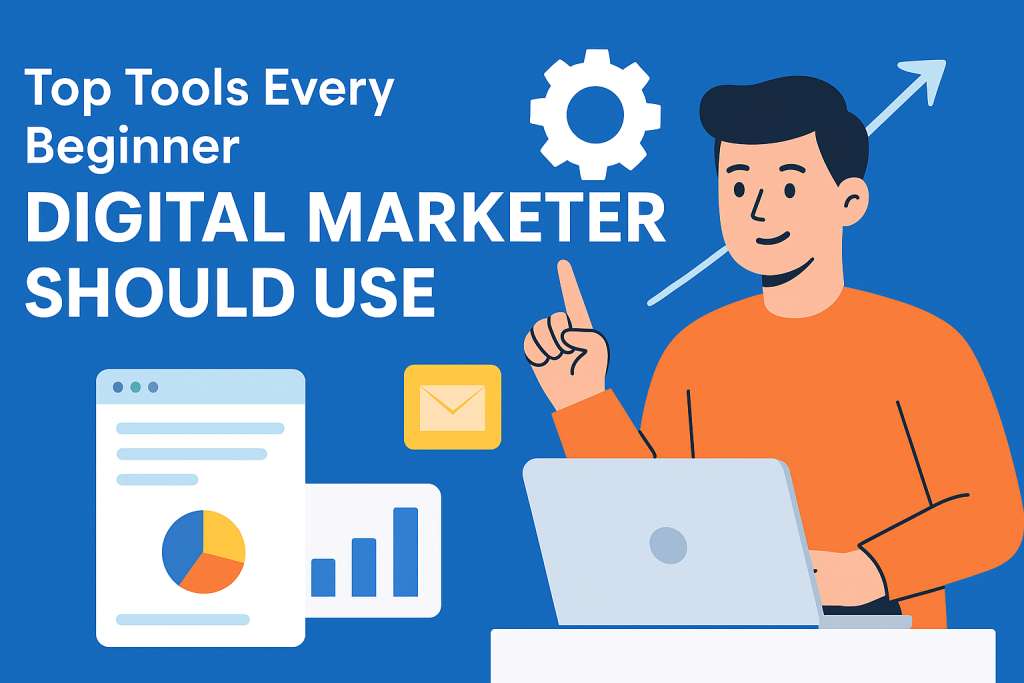
Top Tools Every Beginner Digital Marketer Should Use
Here’s a breakdown by category so you can pick what fits your goals.
1. Google Analytics (Analytics & Tracking)
-
Purpose: Track website traffic, user behavior, and conversions.
-
Why It’s Essential: You can’t improve what you don’t measure. Google Analytics helps you understand where visitors come from, what pages they view, and how they interact with your content.
Pro Tip: Set up Goals in Google Analytics to track sign-ups, sales, or downloads. This makes it easier to measure ROI.
2. Google Search Console (SEO Monitoring)
-
Purpose: Monitor your website’s search performance.
-
Why It’s Essential: Shows you which keywords bring traffic, detects errors, and helps optimize site visibility.
Pro Tip: Use the “Performance” tab to see search queries your audience uses—you’ll uncover new content ideas instantly.
3. SEMRush or Ahrefs (SEO Research)
-
Purpose: Keyword research, backlink analysis, and competitor tracking.
-
Why It’s Essential: Beginner digital marketers often struggle with content ideas and ranking strategies. These tools show you what’s working for competitors and how to outrank them.
Alternative: If you’re on a budget, try Ubersuggest (Neil Patel’s tool).
4. Canva (Graphic Design)
-
Purpose: Create professional graphics for social media, blogs, and ads.
-
Why It’s Essential: Not every beginner has Photoshop skills. Canva offers ready-made templates for posts, infographics, and presentations.
Pro Tip: Use brand kits in Canva to maintain consistency across your marketing materials.
5. Buffer or Hootsuite (Social Media Scheduling)
-
Purpose: Schedule, manage, and analyze social media posts.
-
Why It’s Essential: Social media is time-consuming. With scheduling tools, you can plan a week’s worth of content in an hour.
Pro Tip: Use built-in analytics to find the best posting times for maximum engagement.
6. Mailchimp (Email Marketing)
-
Purpose: Build and manage email campaigns.
-
Why It’s Essential: Email remains one of the highest ROI channels in digital marketing. Mailchimp is beginner-friendly and offers free plans for smaller lists.
Pro Tip: Start with simple newsletters, then experiment with automated drip campaigns.
7. Trello or Asana (Project Management)
-
Purpose: Organize tasks, campaigns, and workflows.
-
Why It’s Essential: Digital marketing often involves juggling multiple projects—ads, blogs, social posts. A project management tool keeps everything in one place.
Pro Tip: Create boards for each campaign and break them into smaller, trackable tasks.
8. Grammarly (Content Writing)
-
Purpose: Grammar and style checker for blog posts, emails, and social media.
-
Why It’s Essential: Content quality impacts credibility. Grammarly ensures your copy is clear, professional, and error-free.
Pro Tip: Use the tone detector to align your writing with your audience’s expectations.
9. Hotjar (User Behavior Insights)
-
Purpose: Heatmaps and user recordings to see how people interact with your website.
-
Why It’s Essential: Analytics tell you what people do, but Hotjar shows you why. This helps improve design and conversions.
Pro Tip: Use feedback polls to directly ask visitors what they’re looking for.
10. Google Keyword Planner (PPC & SEO)
-
Purpose: Find keywords for paid ads and organic SEO.
-
Why It’s Essential: Keyword research is the foundation of any digital marketing strategy. Google Keyword Planner provides real search data for free.
Pro Tip: Look for long-tail keywords with lower competition—they’re easier to rank for.
11. Zapier (Automation)
-
Purpose: Connect apps and automate workflows.
-
Why It’s Essential: Saves time by linking tools (e.g., automatically send new form submissions to Google Sheets or Mailchimp).
Pro Tip: Start small, like auto-adding new subscribers to your email list.
Comparison: Free vs Paid Tools
| Category | Free Tools | Paid Tools |
|---|---|---|
| Analytics | Google Analytics, Search Console | SEMrush, Ahrefs |
| Design | Canva Free | Canva Pro, Adobe Creative Cloud |
| Social Scheduling | Buffer Free, Later | Hootsuite, Sprout Social |
| Email Marketing | Mailchimp Free | ConvertKit, ActiveCampaign |
| Project Management | Trello, Asana (Free plans) | Monday.com, ClickUp |
Start with free tools, then upgrade as your business grows.
Fresh Perspectives: Lessons from My Journey
When I started in digital marketing, I tried doing everything manually. I tracked analytics in spreadsheets, designed posts in Paint (yes, really), and posted to social media one by one.
The result? Burnout, inconsistency, and wasted hours. Once I embraced tools like Canva for graphics and Buffer for scheduling, I regained time and focus. I could finally spend energy on strategy instead of repetitive tasks.
The biggest lesson? Tools don’t replace creativity—they enhance it.
Key Insights for Beginners
-
Start simple: Pick 2–3 tools and master them. Don’t overwhelm yourself.
-
Focus on goals: Choose tools that align with your objectives (traffic, leads, sales).
-
Automate early: Free up time to think big-picture instead of micromanaging.
-
Always measure: Data-driven decisions will separate you from guesswork.
Conclusion: Tools Are Your Digital Marketing Allies
Digital marketing doesn’t have to be complicated. With the right tools, beginners can create professional campaigns, track performance, and scale efforts—all without breaking the bank.
The tools we covered—Google Analytics, Canva, Buffer, Mailchimp, Grammarly, and others—form a solid starter kit. Master them, and you’ll have the confidence and efficiency to grow in the competitive world of digital marketing.
Call to Action
✅ Ready to get started? Pick one tool from this list and try it today.
Already using some of these tools? Share your favorite digital marketing tools in the comments below—and don’t forget to subscribe for more practical guides on building your online presence!